
How to Improve Supply Chain Efficiency with ERP Systems
Sections: Supply Chain Challenges, ERP in Supply Chain, ERP Key Features, ERP Benefits for Distributors, FAQs
By Ximple Team
•
•
3–4 min read
•
supply chain efficiency
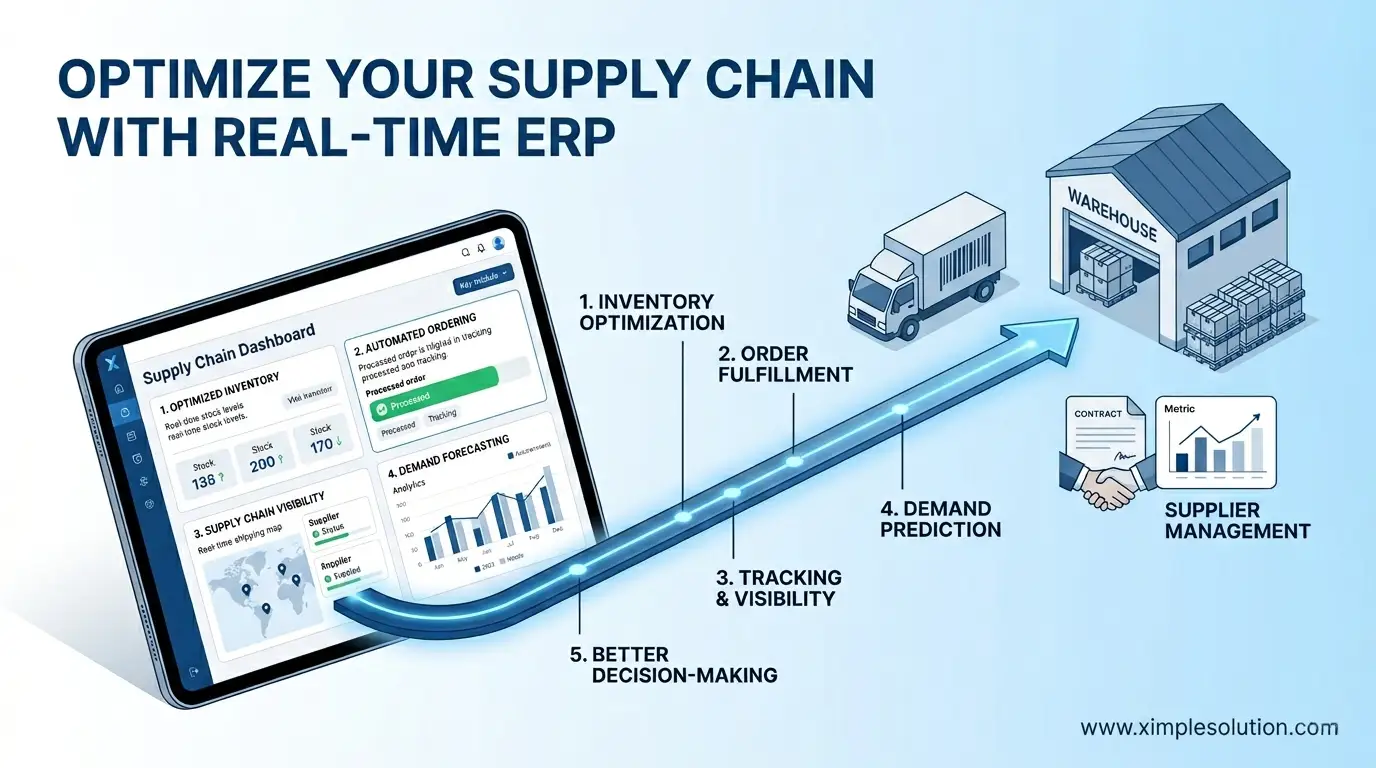
In today’s fast-paced world, the supply chain is the backbone of any business. Wholesalers and distributors, in particular, face unique challenges in ensuring that products move efficiently from suppliers to end customers. As industries like electrical, plumbing, HVAC, construction, and pharmaceuticals continue to evolve, managing supply chains becomes increasingly complex.
An Enterprise Resource Planning (ERP) system can streamline the entire supply chain process, helping businesses overcome inefficiencies, reduce costs, and improve customer satisfaction. By leveraging ERP systems, companies can centralize data, automate key processes, and gain real-time insights into their operations, all of which contribute to better decision-making and improved supply chain performance.
Challenges in Supply Chain Management
Wholesalers and distributors face several challenges that hinder their supply chain efficiency, including:
Inventory Management
Accurate inventory control is critical. Without a proper system, businesses risk either stock shortages or excess inventory, both of which can result in lost revenue or increased holding costs.
Lack of Visibility
Manual processes and disconnected systems can slow down order processing, leading to delays, errors, and unsatisfied customers.
Demand Forecasting
Predicting future demand is a complex task, especially for industries like fasteners, tobacco, and pharmaceuticals. A lack of accurate demand forecasting can lead to stockouts or overstock situations.
Supplier Management
Managing relationships with multiple suppliers, especially across different regions, can be a daunting task without a centralized system to track performance and contracts.
The Role of ERP Systems in Supply Chain Optimization
ERP systems are designed to integrate all key business functions, including supply chain management, into one comprehensive platform. By centralizing operations and data, ERP systems give businesses a unified view of their entire supply chain—from procurement to production, inventory, and shipping.
Key Features of ERP for Supply Chain Efficiency
Inventory Optimization
ERP systems provide real-time visibility into inventory levels, helping businesses maintain optimal stock levels. Automated alerts can notify managers of low stock or overstock situations, allowing for proactive decision-making.
Automated Order Management
ERP automates the order-to-cash process, reducing manual entry and minimizing errors. This leads to faster order fulfillment, improved customer satisfaction, and reduced operational costs.
Supply Chain Visibility
With real-time data, ERP systems provide full visibility across the entire supply chain. This allows businesses to track orders, monitor shipments, and communicate more effectively with suppliers and customers.
Demand Forecasting
ERP systems use historical data and advanced analytics to forecast future demand more accurately. This ensures that businesses can anticipate customer needs, plan inventory, and avoid disruptions.
Supplier Collaboration
ERP systems facilitate better supplier management by centralizing all supplier-related data, such as contracts, performance metrics, and purchase orders. This makes it easier to maintain strong supplier relationships and negotiate better terms.
Benefits of ERP Systems for Wholesalers and Distributors
Implementing an ERP system can offer significant advantages to wholesalers and distributors, especially those in industries such as HVAC, plumbing, electrical, and pharmaceuticals:
Improved Efficiency
By automating manual tasks, ERP systems free up time and resources, allowing employees to focus on higher-value activities.
Cost Savings
ERP systems help reduce operational costs by streamlining processes, reducing errors, and improving inventory management.
Better Decision-Making
With real-time data and analytics, businesses can make more informed decisions regarding procurement, production, and distribution.
Enhanced Customer Satisfaction
Faster order processing, accurate demand forecasting, and better inventory control lead to improved customer service and faster order fulfillment.
Scalability
As wholesalers and distributors grow, their ERP systems can scale with them, ensuring continued efficiency and visibility across the supply chain.
Conclusion
ERP systems play a crucial role in improving supply chain efficiency for wholesalers and distributors across various industries. By optimizing inventory management, automating order processing, and providing real-time insights, ERP systems help businesses streamline their operations, reduce costs, and enhance customer satisfaction.
For any business looking to stay competitive in today’s market, implementing an ERP system is no longer an option—it’s a necessity.
At Ximple Solutions, we specialize in providing ERP solutions tailored to the unique needs of wholesalers and distributors. Our ERP system is designed to optimize your supply chain, improve efficiency, and drive growth.
FAQ
ERP software provides real-time visibility of all SKUs, including vape flavors, nicotine strengths, and hardware. It tracks stock levels, batch numbers, and expiry dates automatically, helping wholesalers avoid stockouts, reduce overstocking, and maintain better control over fast-moving inventory.
Yes. ERP systems can be configured to support compliance needs such as age verification tracking, product documentation management, and regulatory reporting. This reduces the risk of penalties and ensures businesses stay aligned with industry regulations.
Unlike manual systems, ERP automates order processing, invoicing, inventory updates, and shipping workflows. This reduces human errors, speeds up operations, and integrates all business functions into one system, leading to smoother and more efficient distribution management.
Related Blogs
How to Grow Wholesale Distribution Business
Transform Wholesale Distribution Business Ximple
› Learn More for Distributors
Struggling with inventory delays, disconnected operations, and order errors?
Ximple ERP helps distributors streamline supply chain processes with real-time visibility and automation.